
The context
Social Care Wales was in the middle of a digital transformation when I began to working with them. The focus had been on the technical side, moving back end systems and restructuring data.
They realised that their users, the frontline care workers, were not part of the transformation and could easily be left behind so engaged a small team to carry out a discovery to understand how better use of data could help improve the working lives of care practitioners day to day.
The problem
The goal was to identify alphas that could be explored by the in-house team. We started by carrying out research with social workers and managers from across Wales. There are 22 local authorities and I led the research with people from a cross section of those. In presenting the research I identified common elements and used this to map the process to broad areas of activity. This meant that we could consider work that had the broadest appeal.
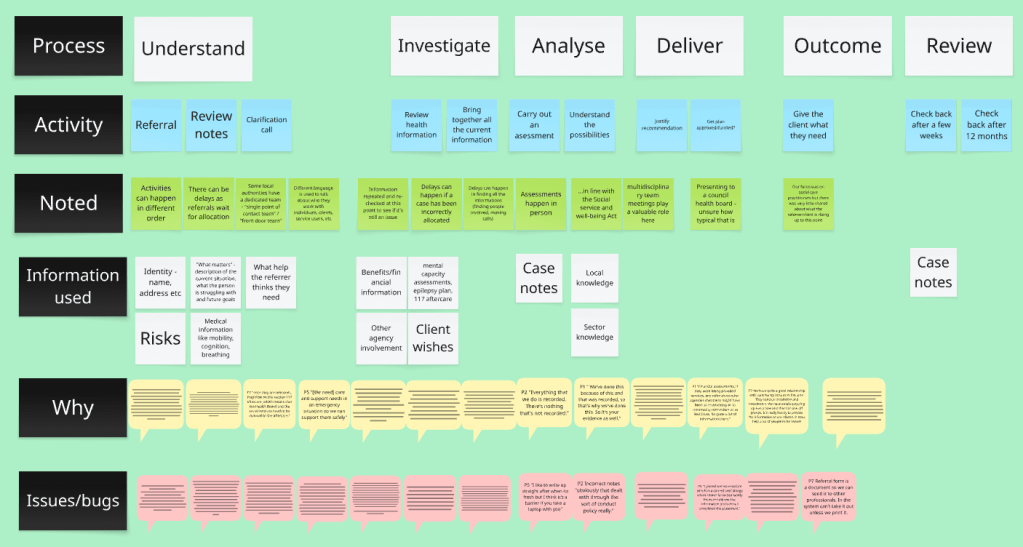
In analysing the findings we found several opportunities to improve how social workers carried out their tasks if there was better use of data. Together with our stakeholders mapped these into Impacts and Opportunities.
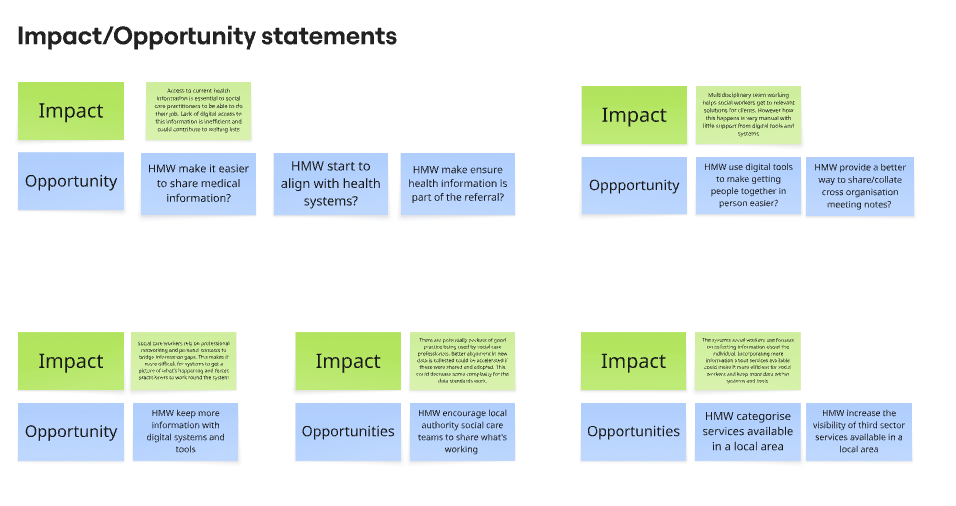
One area that stood out was the difficulty finding relevant services for patients/clients. Social workers would work with clients to identify their needs but when they needed to get them the necessary support, usually provided by third parties, they would often spend hours sourcing and securing places.
Exploring the opportunity
We started with the hypothesis:
We believe that including more detail in a directory of services will make it a useful resource for social care practitioners, as well as the general public, and create more users for any future directory.
We also noted our assumptions; that the general public and practitioners would probably need different information and that there wasn’t something that already existed.
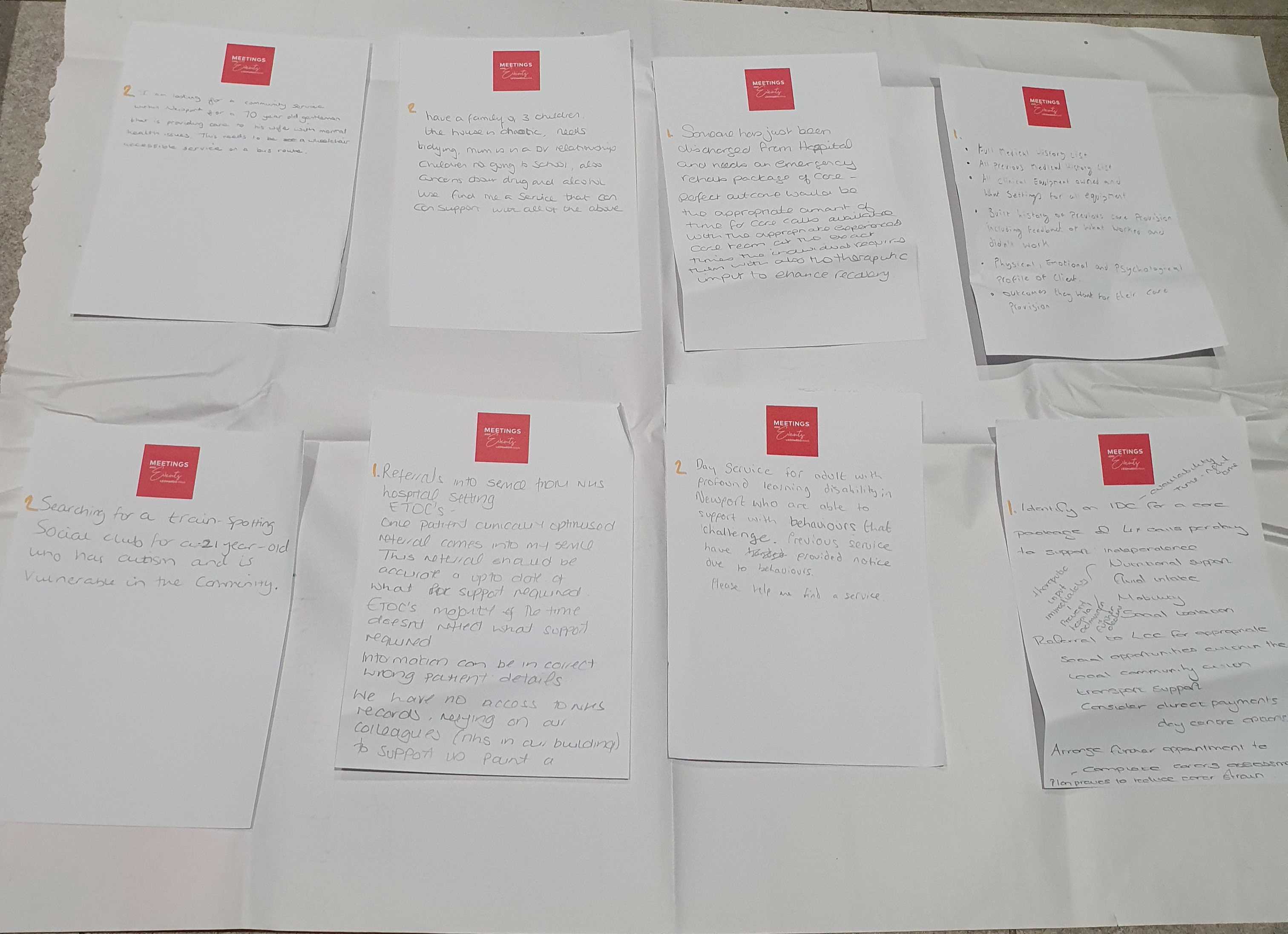
With this information I designed a short workshop that I could run as part of a conference day. I used a Barbie inspired theme to get more detail about what existing resources offered and what our users really needed.
The key learning from that workshop was that practitioners needed to find a suitable service with availability. In the backdrop of increasing costs, lack of provision and increasing client complexity the task felt like trying to find a needle in a haystack.
What we also learned was that our assumption about the needs of the public and practitioners was wrong.
The next right step?
Using that feedback I worked on designing a prototype that focused more on the information care workers said they needed. I had assumed I would need to build something myself from scratch but Figma had the option to use AI. It was my first time designing with AI and I needed a few goes at getting the prompt right… so many that I used all my credits before I had what I needed. I ended up using what I had learned in different tool to create a ‘working’ care home website.
There was an opportunity to take this to potential users at another conference day in Cardiff so I designed a new workshop. I used it to confirm some of the findings from the first round of sessions as well as get feedback on the prototype.
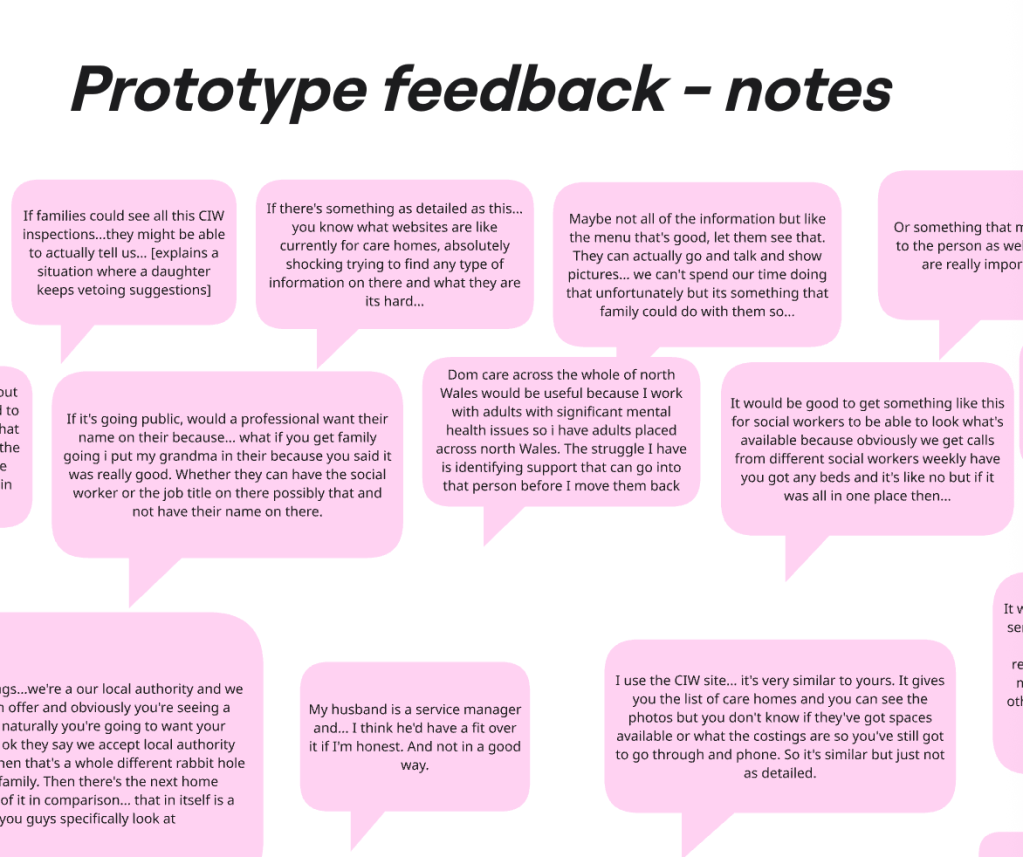
The takeaways from that workshop included:
- the importance of availability of services to care practitioners
- the idea that a single place for the information would reduce the burden on practitioners
- being transparent about cost information could have a series downside and should be carefully considered.
The Outcome
As this was a discovery the outcome was a strong recommendation that this work be taken forward as an alpha. The key value for Social Care Wales was that were armed with the knowledge to focus on what was actually needed by care practitioners. Service directories existed and there were plans to work on another but they were not being used by the target audience because they didn’t have the most important piece of information – availability of places. From this discovery work they now have the opportunity to spend the resources on delivering the right thing.
Lessons learned
- The prototype I created could be used by individuals on their own devices making it more accessible and enabling fast feedback
- While AI helped to create a high fidelity website, it was not particularly realistic which some participants found distracting
- Being open with the idea early gave us valuable, unexpected feedback that propelled the alpha proposal
 FionaDoesDesign